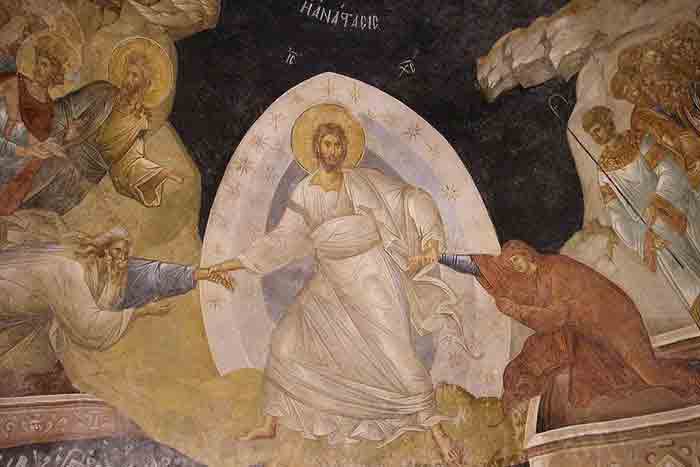
In the tenth century, a small chapel decorated with fresco paintings was built to the north of the Church of St John the Theologian. These wall paintings probably showed figures of saints and scenes from the Bible, continuing the strong artistic tradition of the Byzantine period. The addition of this chapel shows that the site remained important for Christian worship long after the great age of Emperor Justinian.
By the fourteenth century, the situation in the region had changed. Christianity was no longer the dominant religion, and before the construction of the İsa Bey Mosque in Selçuk, the former Church of St John was used as the principal mosque of the city. This reuse of the building reflects the continuity of sacred space in Anatolia, where important religious structures were often adapted rather than abandoned The Cross-Shaped Church of St John.
The Oratory on the Hilltop
At the very top of the hill stands the remains of an apsed structure dating to the sixth century. During the Turkish period, this building was reused as a cistern to store water. According to local tradition, however, this ruin is believed to be the oratory of St John, the place where he wrote the Fourth Gospel.
Legend claims that Saints Peter and Paul visited St John here and encouraged him to write his Gospel. It is said that St John completed the work in a single hour, inspired by divine guidance. Although this story belongs more to tradition than to history, it shows how strongly the site was associated with the memory and authority of St John in the Christian imagination.
Questions About Authorship
Neither ancient Christian tradition nor modern scholarship fully agrees on the identity of the author or authors of the writings attributed to St John. Scholars continue to debate whether the Fourth Gospel, the Book of Revelation, and the Letters of John were written by the same person or by different individuals. There is also uncertainty about whether St John the Apostle, St John the Evangelist, and St John the Theologian refer to one person or several figures Vitosha Bulgaria Private Tours .
Despite these debates, popular Christian tradition has long accepted that the church on this hill was built over the tomb of St John the Theologian, who is identified as both the Apostle and the Evangelist. This belief gave the site its lasting importance as a place of pilgrimage and devotion.
Modern Pilgrimage and Papal Visit
The sacred character of the site continued into modern times. On July 26, 1967, Pope Paul VI visited the Church of St John the Theologian and offered prayers there. His visit renewed international attention to the site and confirmed its importance for Christians around the world. Marble revetments from the Byzantine period, now displayed in Selçuk, offer further evidence of the former beauty and richness of the church.
The Grotto of the Seven Sleepers
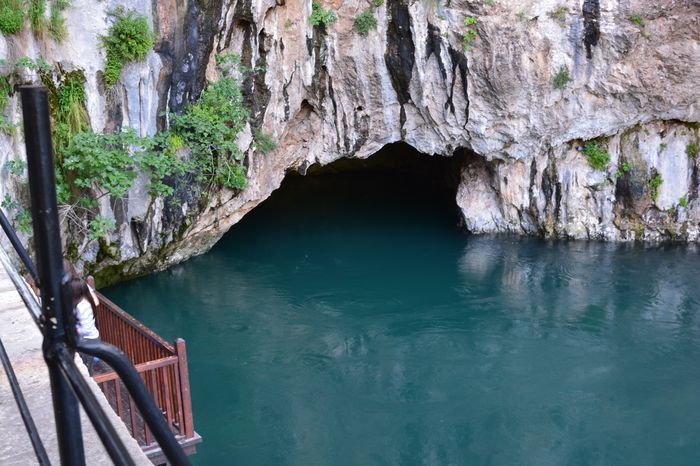
Another important Christian site near Ephesus is the Grotto of the Seven Sleepers. According to a Christian tradition from late antiquity, a young man appeared in Ephesus in the mid-fifth century and tried to buy food using coins that were about two hundred years old. When accused of forgery and brought before a court, the young man, named Maxianus, explained that he and his companions had been hiding in a cave since the reign of Emperor Decius (249–251).
He claimed that he and six friends—Malchus, Martianus, Constantine, Dionysius, John, and Serapion—had refused to take part in imperial cult rituals. To escape persecution, they had taken shelter in a cave at the foot of Mount Pion and fallen asleep. Miraculously, they had slept for two centuries.
Meaning and Archaeology of the Site
This story appeared at a time when Christians were debating the resurrection of the body, and it was welcomed by the local church as proof that resurrection was possible. After the young men died, they were buried in the cave, and a church was built over it, traditionally attributed to the reign of Theodosius II.
Over time, the cave became a popular burial site. Archaeological excavations have revealed many graves and oil lamps decorated with scenes from the Old Testament as well as images drawn from pagan traditions. These finds show how deeply the story of the Seven Sleepers influenced both religious belief and daily life in late antique Ephesus.